
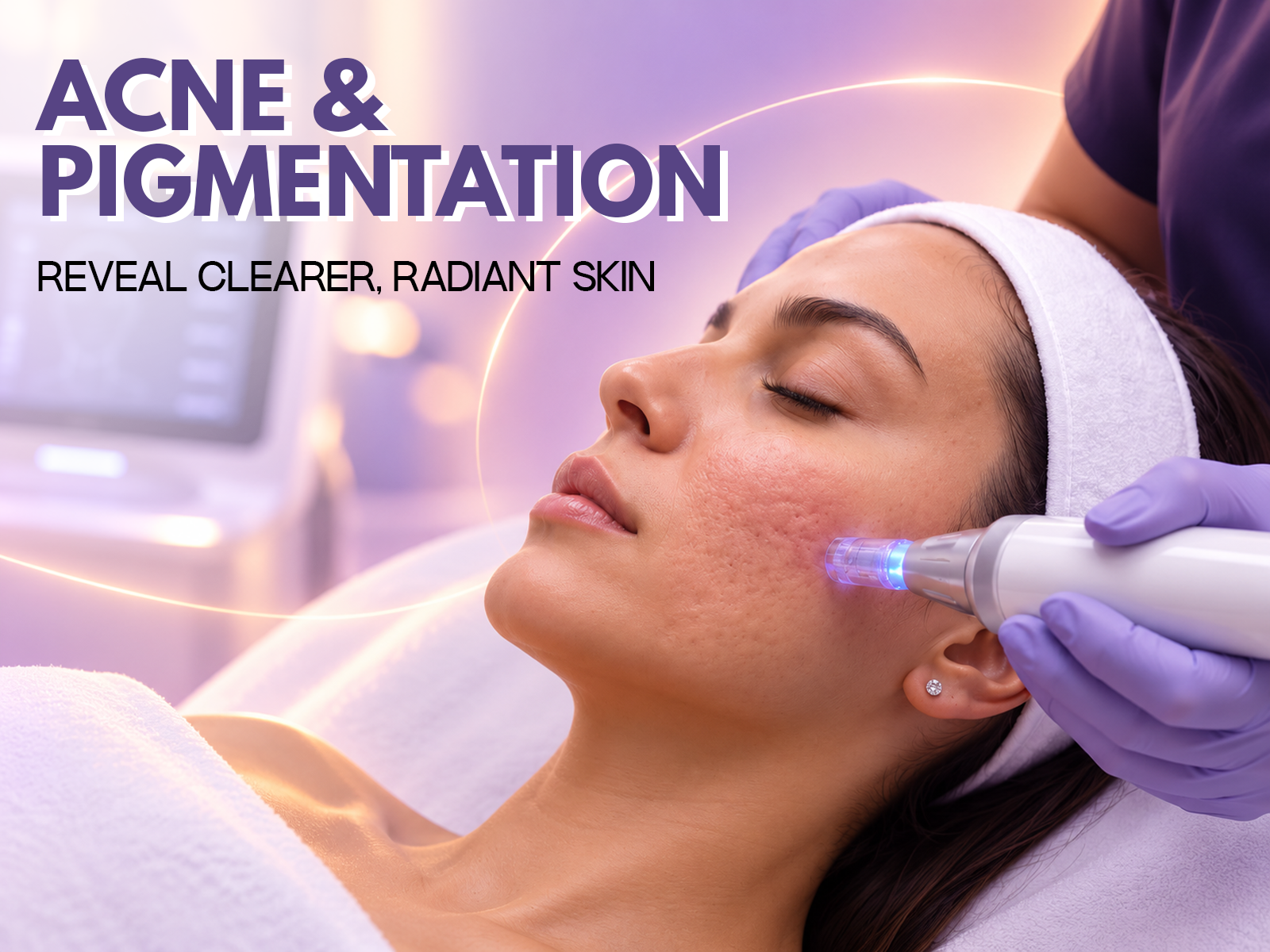
Separate active acne, marks and scars
Acne develops when follicles become blocked and inflamed. Oil production, hormonal influences, genetics and some products or medicines can contribute. Blackheads, whiteheads, inflamed spots and deeper nodules need different levels of care. Acne is not simply caused by dirty skin; aggressive washing can add irritation.
Brown marks after acne are often post-inflammatory pigmentation. Red marks, depressed scars and raised scars are different problems. Melasma and sun-related pigmentation can overlap with acne marks but require their own diagnosis. Treating every dark patch with the same peel or laser can worsen irritation or pigmentation, particularly in darker skin tones.
Who needs assessment before a procedure?
Persistent breakouts, painful deep lesions, early scarring or pigmentation that is spreading deserve a clinical review. Sudden severe acne or acne with other hormonal symptoms may need further assessment. A changing, bleeding or unusual pigmented lesion should be examined rather than treated as a routine cosmetic spot.
Tell the team about pregnancy plans, medicines, previous isotretinoin, eczema, allergies, herpes outbreaks and reactions to past procedures. These factors can change product selection and timing. Suitable candidates for a procedure are selected after active inflammation, skin-barrier condition, skin tone and the type of pigmentation have been assessed.
Treatment options and how they work
Evidence-based acne care often starts with a consistent home regimen. A clinician may consider topical treatments that reduce blocked pores and inflammation, and prescription medicines where severity warrants them. Antibiotics require medical supervision and should not become indefinite stand-alone treatment. A facial cannot replace appropriate treatment for nodules or scarring acne.
Selected peels can exfoliate surface layers and may help some acne or pigment concerns, but strength, depth and spacing matter. Pigment-targeting lasers are suitable only for selected diagnoses. Scar treatments such as microneedling or radiofrequency-based procedures address texture rather than active infection. Melasma often needs long-term photoprotection and maintenance; overly aggressive procedures may trigger recurrence or worsening.
The treatment journey and expected sessions
A useful plan begins with a diagnosis, a baseline record and a clear first priority. Often this means bringing active acne under control before treating residual marks or scars. Introduce products in a way that allows the skin to tolerate them, then review response rather than changing everything every few days.
Acne medicines are generally assessed over weeks, and pigmentation may take months to improve. Procedural care may involve a spaced series, but there is no session count that suits every acne, scar or pigment pattern. Your clinician should specify the planned review interval and explain when the plan would change. Improvement does not mean a guarantee of permanently poreless or completely uniform skin.
Benefits, downtime and everyday aftercare
The goals may include fewer new breakouts, less inflammation, fading of selected marks and gradual texture improvement. These outcomes develop at different speeds. Peels can cause dryness or visible flaking; deeper or energy-based procedures may involve more redness and recovery. Ask for your procedure's specific downtime rather than assuming all skin treatments are lunchtime procedures.
Use a gentle cleanser, moisturiser and broad-spectrum sunscreen as advised. Do not pick spots, peel shedding skin or add scrubs and strong actives during recovery. Discuss when to restart retinoids or acids. Blistering, increasing pain, spreading redness or pus should be reported promptly. Ongoing sun protection and a tolerable maintenance regimen are central to reducing relapse.
Why choose a consultation at Meadows?
Meadows offers a range of skin and aesthetic pathways, which makes it possible to discuss acne, pigmentation and texture as separate treatment goals. The value lies in choosing the right sequence, explaining risks for your skin tone and reviewing response. Ask who will assess and perform the proposed procedure, and confirm its availability at your clinic.
Read the acne concern guide and the melasma treatment page, then book a consultation. The most advanced option is the one that fits the diagnosis and can be used safely; it is not necessarily the strongest peel or newest device.
Frequently asked questions
Can I treat marks while I still get acne? Sometimes, but controlling new inflammation is usually essential to prevent new marks. The clinician will sequence treatment.
Will a peel permanently cure acne? No. Acne may need ongoing medical and home care.
Can a laser remove every kind of pigmentation? No. Diagnosis and skin type determine suitability; some pigment disorders worsen with unsuitable procedures.
Why are results slower than expected? Skin turnover, pigment depth, ongoing triggers and treatment tolerance affect progress. A review can identify whether the diagnosis or plan needs adjustment.
Further reading: AAD: acne clinical guideline